
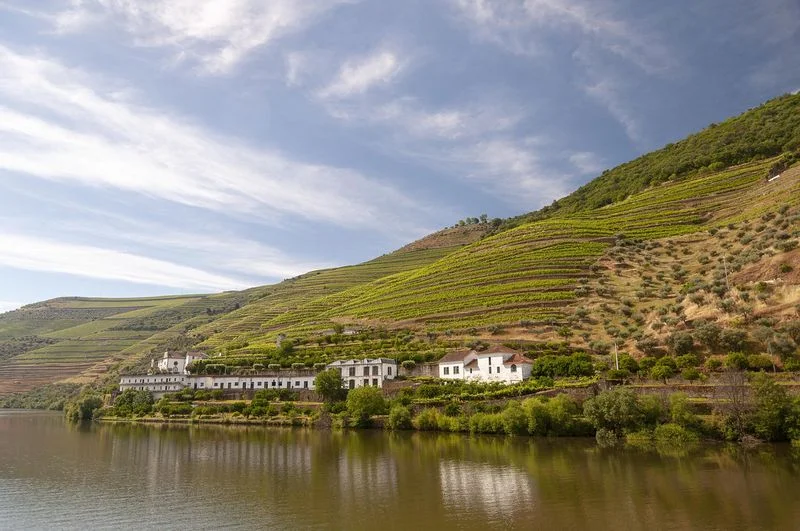
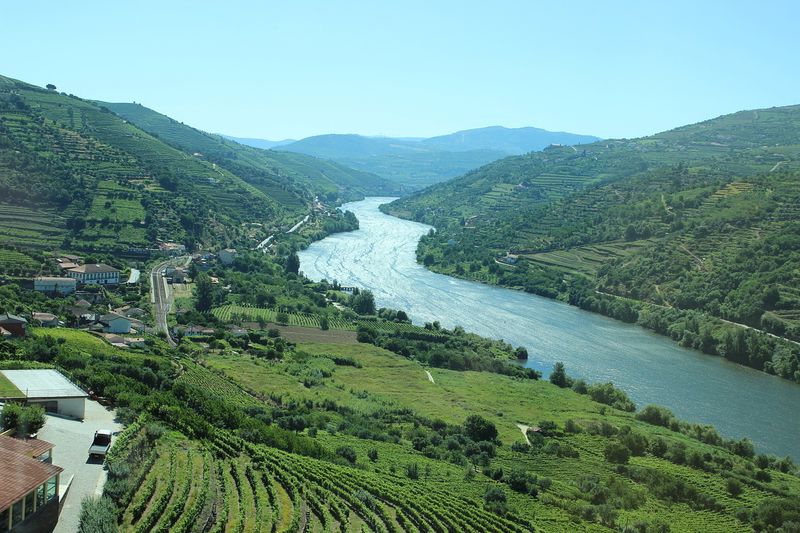
The name Douro is ancient. Some link it to a Galician-Portuguese word (doiro) or to the Latin durius, both meaning water. Others say it comes from an ancient Indo-European word (dubrus) meaning black. Either way, the Douro Valley runs along the “river of water” or the “black river” (the Douro). It’s one of the three largest rivers of the Iberian Peninsula in southern Europe and stretches for almost 900 km (560 miles). It begins in the Castile region of Spain, flows west, then turns southwest and actually forms part of the border between Spain and Portugal. Once it enters Portugal, it flows west again.
The Douro meets the Atlantic Ocean at a spot in Porto called Foz do Douro.
The Douro Valley is dotted with small towns and villages, and it’s known above all for its historic (and still thriving) tradition of growing the grapes used to make the famous port wines.
How Do You Get to the Douro Valley?
The right question is: where in the valley? It stretches for dozens of kilometers, so you can visit just its western end or go deeper and deeper to the east.
Assuming you’re setting out from Porto, there are two main ways to travel along the valley and the river: by car and by train.
Car
A winding road runs along the river and through the valley, sometimes right beside the river and sometimes away from it, sometimes at water level and sometimes high above it. It passes through towns and villages and crosses bridges, and the drive is interesting but demands concentration. It’s a great way to explore the Douro Valley, giving you freedom and the ability to stop at any point of interest along the way.
Book your car in advance to save yourself the hassle of comparing prices and looking for a reliable rental agency during your trip. You can search for cars on a car rental comparison site.
Train
A train runs east from Porto’s Campanhã or São Bento stations into the Douro Valley. It’s a fairly old, non-air-conditioned diesel train, so you’ll definitely smell the fumes. About an hour after leaving Porto it reaches the riverbank and runs alongside it. The scenery is fascinating, and if you don’t have a car or don’t feel like the winding drive, it’s a nice option.
Organized Tours to the Douro Valley
Many companies run day trips or longer tours from Porto along the river, combining visits to wineries, vineyards, viewpoints, bridges and more.
You can join a great tour from Porto to the Douro Valley. Along the way you’ll take in the valley’s scenery, taste local wine and olive oil, enjoy a traditional lunch and relax on a cruise along the Douro River. The tour is led by an English-speaking guide.
Click here to book a place on the tour – free cancellation up to 24 hours in advance.
When to Visit the Douro Valley
In general, the weather in the Douro Valley gets warmer the further east you go. You can visit all year round, though many people time their visit for the grape harvest (September–October), when you can actually watch the harvest in the laden vineyards (in some places you can even join in stomping the grapes).
A Few Words on Wine, the River, Boats and the Douro Valley
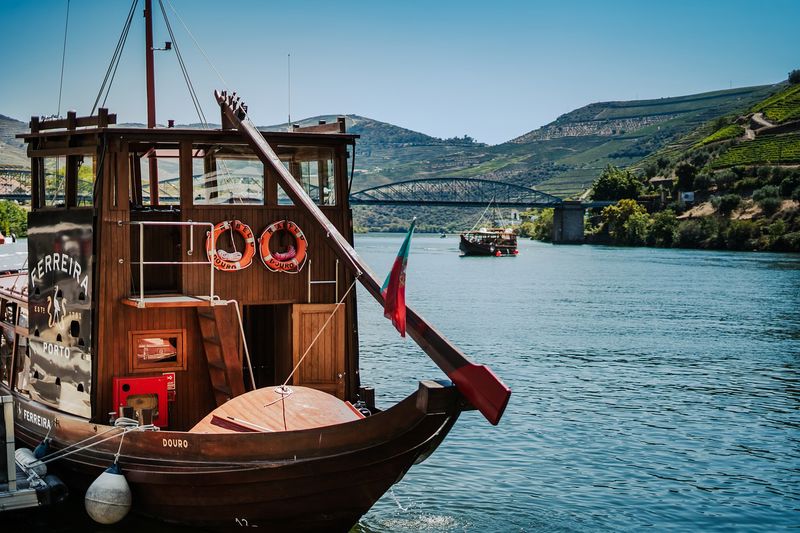
The Douro Valley is known for producing the famous port wine named after the region, and it has a very long history. The river itself was the main route for shipping barrels of wine for trade. If you make it to Peso da Régua, a town on the riverbank (considered the valley’s capital), you can visit a museum on the history of winemaking, including old tools used by the first winemakers (and you get a glass of wine at the end).
Boozy Trivia
One of the characteristics of port wine is that it’s fortified with brandy, which gives it its distinctive taste. This is credited to the English, who a few centuries ago had a very close alliance with Portugal. When wars with France caused a shortage of wine, they turned to the Portuguese, and many English merchants began trading wine with the people of the Douro. But because shipping the wine to England took a long time and it tended to spoil, they added alcohol (brandy) to it, and that’s how fortified port came about.
Where to Stay in the Douro Valley
There’s a wide range of accommodation in the small towns and villages along the valley. Once you’ve chosen which places along the river you want to visit, you can find the area where you’ll stay.
Here are a few recommended places to stay:
Cimo da Vinha – Nature Spot: Cimo da Vinha – Nature Spot is 40 km from Santa Maria da Feira Castle and has a terrace, a bar, free private parking, an outdoor pool and room service.
Douro Castelo Signature Hotel & Spa: A 4-star hotel in Lamego, 1.5 km from the Sanctuary of Our Lady of Remedies. It offers concierge services, hypoallergenic rooms, a terrace, free Wi-Fi throughout, a bar, room service and a 24-hour front desk.
The property has a year-round outdoor pool, an indoor pool, a sauna and a garden.
Casa De Casal De Loivos: Casa do Casal de Loivos offers an intimate stay in a 17th-century manor house with an outdoor pool and a sun terrace with stunning views of the Douro Valley
Keep in mind that in summer and just after, during the harvest season, the area is crowded with visitors and prices are expected to be high. Book your accommodation in advance at that time.
Recommended Attractions in the Douro Valley
River Cruises
Several companies offer river cruise packages ranging from a few hours to a full day and up to several days. Cruises can leave from the Porto area or from various places along the river.
This tour leaves from Porto for the Douro Valley and includes a cruise. Along the way you’ll visit the town of Amarante and taste two kinds of regional wine at two wine estates. The tour also includes a local lunch followed by a cruise on the river past the valley’s spectacular scenery.
Where the Bridges Meet
Near the town of Peso da Régua there are several bridges that seem to cross over one another, in what tourists call “the bridges photo spot”.
River Swimming and Water Sports
There are stretches of riverbank meant for swimming, and on summer days you’ll see locals and tourists sunbathing on the bank and splashing in the water. One such beach is in the town of Resende, at Porto de Rei park. Like other spots, it also offers a range of water sports (kayaks, SUP, boat trips, jet skis and more).
Sanctuary of Our Lady of Remedies (Santuário de Nossa Senhora dos Remédios)
For church lovers, in the town of Lamego stands a holy sanctuary that draws many believers. It’s dedicated to Our Lady of Remedies, a holy figure who, in Christian belief, grants health and healing. The church is famous for the roughly 600 steps you climb to reach it (don’t worry, you can also drive up). The steps and the way up are especially impressive, decorated with traditional tiles (azulejos), fountains and statues.
Wineries, or in Portuguese “Quintas”
The valley has dozens of wineries involved in different stages of winemaking, some small and local (some even stick to traditional methods of processing the grapes) and some on an industrial scale. Many offer wine tours where you can hear about the process and its history and taste the wine. If you’re looking to combine accommodation and a wine estate, read about Quinta de São Bernardo.
A Little Tip!
In Porto and in big supermarkets you’ll find most of the wines produced in the valley, so if you tasted one you liked, you can buy it before you fly home.