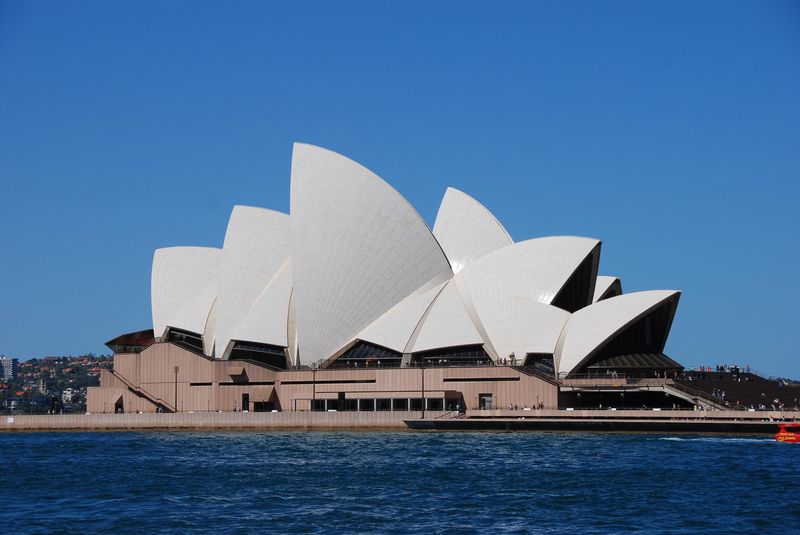
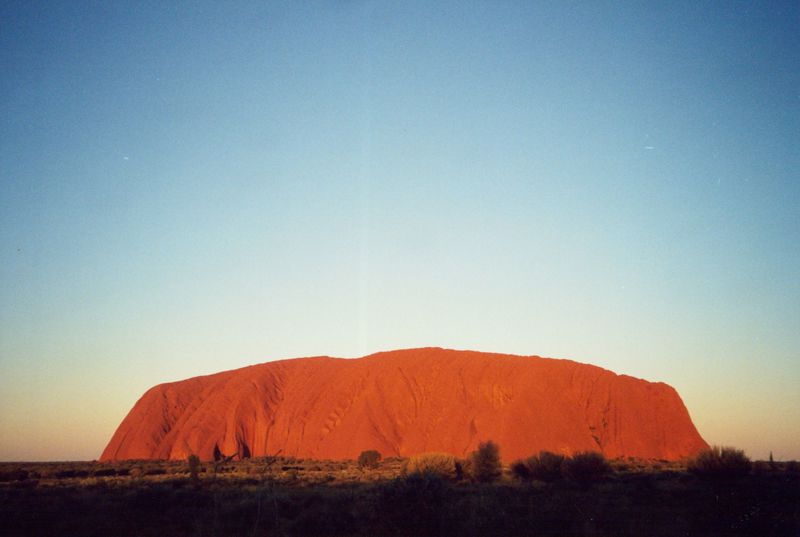
Australia is a continent-country in the Southern Hemisphere, the sixth largest in the world and the only one with no land neighbors: it is surrounded by the Indian Ocean to the west and the Pacific Ocean to the east.
Almost the entire population lives along the eastern and southern coasts, in Sydney, Melbourne, Brisbane, Adelaide and Perth, while the heart of the continent, the Outback, is a vast and almost empty desert.
Distances in Australia are huge: a flight from Sydney to Perth takes about five hours, and driving between attractions can take a whole day. It’s best to choose one or two regions and explore them in depth rather than trying to cover everything.
Australia is in the Southern Hemisphere, so its seasons are reversed compared with Europe and North America: December to February is summer, and June to August is winter.
When to Visit?
It depends on where in Australia. It’s so big that on any given day it has several completely different climates. Spring and autumn (September to November and March to May) are the most comfortable time for most destinations: pleasant weather in Sydney, Melbourne and Adelaide, fewer tourists and more reasonable prices. It’s also the best time to drive the Great Ocean Road and to travel in the Outback. The Australian summer (December to February) is the big beach season, and it’s also the locals’ summer vacation, so prices are high and everything is full. In the tropical north, in Queensland and Darwin, it’s the wet, rainy season, with dangerous jellyfish in the water. In the Outback the heat can exceed 40°C. The Australian winter (June to August) is actually the best time for the north: dry and pleasant in Cairns, on the Great Barrier Reef and at Uluru. The south is cool and rainy, and in the mountains of Victoria and New South Wales it even snows and you can ski.
Useful Tips
Visa – most visitors need a visa or travel authority before arriving. Depending on your passport, that’s an ETA, an eVisitor or a Visitor visa (subclass 600), all applied for online through the Australian immigration website. Apply a few weeks in advance, as approval isn’t always instant.
Drive on the left! In Australia you drive on the left side of the road and the steering wheel is on the right. If you rent a car, take it easy on the first day and pay special attention at roundabouts and when turning right.
Uber – works in all the major cities and is usually much cheaper than a taxi. Download the app before your trip, since it sends an SMS to verify your phone. You enter the destination when you book, so there’s no confusion about the address. Click here to download.
Local SIM – the three big networks are Telstra (the best coverage outside the cities), Optus and Vodafone. You can buy a SIM at the airport, in supermarkets or at the carriers’ stores. Note: in the Outback and on long highways there are whole stretches with no reception at all.
The Australian sun is fierce – the UV index there is among the highest in the world, and you can burn within 15 minutes even on a cloudy day. A hat, sunglasses, a shirt and SPF 50 sunscreen are a must, not a suggestion.
The distances are huge – don’t plan to see all of Australia in two weeks. For hopping between cities there are cheap domestic flights with Jetstar, Virgin Australia and Qantas, and it’s worth booking them in advance.
Each city has its own transit card – Opal in Sydney, Myki in Melbourne and Go Card in Brisbane. In most cities you can simply tap a credit card or phone on the reader and pay directly.
Border control is very strict – you may not bring food, seeds, wooden products or plants into Australia. Declare everything on the arrival card; the fines for failing to declare are especially heavy.
Currency
The currency in Australia is the Australian dollar (AUD).
Note that Australia is almost cashless: you pay by card or phone almost everywhere, and some businesses no longer accept cash at all. It’s still worth carrying a small amount for markets and small businesses.