Essential Information for Travelers in Taipei
Here we’ve gathered all the information to help you plan your trip to Taipei: getting to know the city and its main areas, how much time to give it, how to get around and when to go.
Getting to Know Taipei
To understand Taipei, it helps to know a little about Taiwan’s complex history first. The island was inhabited for thousands of years by Indigenous peoples, and later went through periods of Dutch, Spanish and Chinese rule. At the end of the 19th century it became a Japanese colony, and remained under Japanese rule until the end of World War II in 1945.
In 1949, after the Kuomintang lost the Chinese Civil War to the Communists, its leaders under Chiang Kai-shek retreated to Taiwan and moved the government of the Republic of China there, with Taipei as its seat. For decades the island was ruled by an authoritarian regime under martial law, during which opponents of the government were suppressed. Martial law was lifted in 1987, and since then Taiwan has gone through rapid democratization and become a modern democracy.
Taipei’s development reflects these periods. Significant urban settlement in the area began in the 18th century, and in 1887 the city was declared the capital of Taiwan Province. Japanese rule expanded it, paving streets and building public buildings and infrastructure, and after 1949 it became the de facto capital of the Republic of China and the political, economic and cultural center of Taiwan. So on your trip you’ll see temples and shopping streets from the Qing dynasty, which ruled China until the early 20th century, buildings from the Japanese era, monuments from the authoritarian period and skyscrapers representing modern Taiwan.
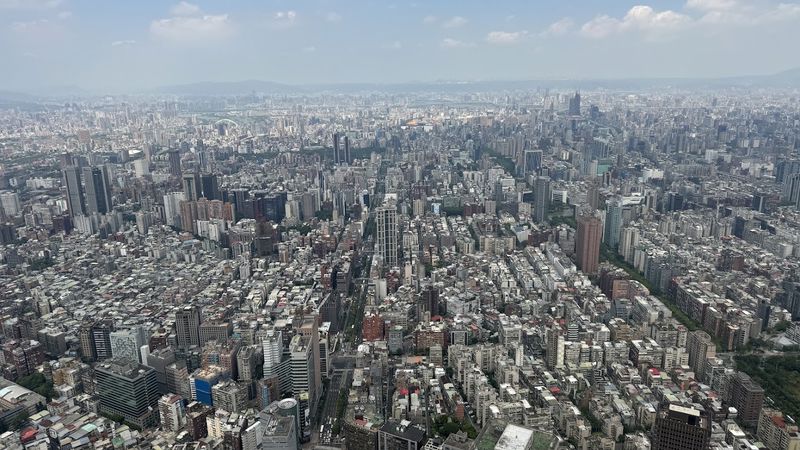
About 2.4 million people live in the city itself, so it’s no small city, but compared to other East Asian megacities it feels compact, orderly and relatively easy to explore. Most of the sights that interest tourists are concentrated in a few main areas, and the metro makes it easy to move between them.
One of the things that makes Taipei so interesting is the constant shift between old and new. Next to modern office towers and malls stand active temples full of incense, and between the wide boulevards hide historic shopping streets, old tea shops and local markets. In the evening the city changes its face, as the night markets fill with food stalls, games, shopping and crowds of local families.
Taipei also has a very green side. Hiking trails, hot springs, mountain teahouses and gondolas are within the city limits or a short ride away, so in the same day you can combine a visit to a museum or an air-conditioned mall with a walk in nature and a view of the skyline.
I’d give Taipei a minimum of 3 to 4 days, but you could easily stay a week or more and still go home wanting more.

The Main Areas of Taipei
Taipei has more than ten districts, and they’re very different from each other. But these are the main areas worth knowing:
Xinyi
In the southeastern part of central Taipei, this is the city’s most modern and upscale area and home to its famous symbol, Taipei 101. Around it are big malls, restaurants, luxury hotels, office towers and plazas. People come here, of course, for the view from the top of the tower, and for shopping. But you don’t have to stay inside the malls, near Taipei 101 begins the climb up Elephant Mountain, which offers one of the most beautiful views of the tower and the whole city.
Ximending
One of Taipei’s youngest and most colorful neighborhoods. It’s west of the historic center and Taipei Main Station, and is a bit reminiscent of Tokyo’s entertainment districts, with neon signs, fashion shops, restaurants, food stalls, arcades and street performers. It’s fun to come in the afternoon and stay into the evening, when the streets fill with people, to shop and experience Taipei’s young side.
Zhongzheng
This district in the heart of Taipei, spreading around the main station and the old government center, has some of the city’s most important sights, including the Chiang Kai-shek Memorial Hall, 228 Peace Memorial Park and the National Taiwan Museum. As mentioned, it’s also home to Taipei Main Station, which connects the metro, regular trains, the high-speed rail and the airport train. So it’s a very convenient area to stay, especially on your first visit, because it’s easy to get almost anywhere in the city and to head out on day trips.
Wanhua
This neighborhood is in the southwestern part of central Taipei and is one of the oldest areas in the city. The famous Longshan Temple is here, an active and especially impressive temple that lets you get up close to local traditions and beliefs. Around the temple are markets, old shopping streets and alleys showing a rougher, more local side of Taipei. Here too is the Bopiliao Historic Block, where buildings from different periods of the city’s history have been preserved.
Datong and Dadaocheng
These areas are northwest of the main station, between the city center and the Tamsui River, and they’re great for wandering on foot. The main street is Dihua Street, lined with old merchant houses and shops selling tea, herbal medicine, fabrics, housewares and local foods. Not far away is Ningxia Night Market, a compact market that’s relatively easy to visit with kids. In the late afternoon you can also walk along the river and around Dadaocheng Wharf, which has become a popular spot at sunset.
Da’an
Da’an is southeast of the city center, between Zhongzheng and Xinyi, but it’s calmer than its surroundings, with pleasant streets, cafés, restaurants, small shops and lots of greenery. At its heart is Daan Forest Park, one of the largest urban parks in Taipei, perfect for a break from the bustle and for time with kids. The area is also home to Yongkang Street, known for its restaurants, teahouses and dessert shops. Da’an is also a great neighborhood to stay in for those who prefer a pleasant, local neighborhood while staying close to the center.
Songshan
In Songshan, east of the city center and north of Xinyi, you’ll find Raohe Night Market, one of Taipei’s most famous night markets. Next to the market entrance stands the impressive Songshan Ciyou Temple, so you can combine both in one visit. Another part of the district is devoted to culture and design: Songshan Cultural and Creative Park, a complex built inside an old tobacco factory that now hosts exhibitions, design shops, cafés and events.
Beitou
An area in northern Taipei that feels almost like a separate resort town. It’s famous for its hot springs, its geothermal valley and its spa baths. You can easily reach Beitou by metro and spend half a day or more there. It’s completely different from central Taipei and shows how accessible nature is without even leaving the city.
Shilin
This neighborhood is in the north of the city, south of Beitou and north of central Taipei. Shilin is best known for its big night market, but it has much more: the National Palace Museum, the Astronomical Museum, the Science Education Center and the Taipei Children’s Amusement Park are all here. It’s a perfect area for a family day out, because you can combine several kid-friendly attractions in one day and finish at the night market.
As you can see, there are lots of fascinating places to visit in Taipei, and everyone can find their favorite experiences, in the city or in nature, shopping or eating, at viewpoints or in hot-spring baths.
When to Visit Taipei?
The most pleasant times to visit Taipei are usually spring, from March to May, and autumn, in October and November. Temperatures are milder then and it’s comfortable to explore on foot, although it can rain in the city at any time of year.
Summer, from June to September, is very hot and humid, with heavy showers and a chance of typhoons. You can certainly travel in these months, but be prepared for the heat, take an umbrella and stay flexible, as rain may disrupt plans. Winter, from December to February, is relatively cool and sometimes rainy and gray, but temperatures are usually comfortable compared to a European winter. It can be a good time if less predictable weather doesn’t bother you and you really don’t like heat and humidity.
Local Currency
The local currency in Taiwan is the New Taiwan dollar (TWD), usually written as NT$. As of July 2026, one US dollar is worth about 32 New Taiwan dollars. Exchange rates change, so check the current rate shortly before you travel.
In Taipei you can pay by credit card at hotels, malls, larger restaurants and most attractions. However, cash is still very useful at night markets, food stalls, small shops and some local businesses.
ATMs are easy to find, especially at convenience stores, and most accept international cards.
How to Get to Taipei?
Taipei is well connected by air: there are direct flights from many cities in Asia, as well as long-haul routes from North America, Europe and Australia. Depending on where you’re coming from, you may need a stopover, often in hubs such as Dubai, Bangkok, Hong Kong, Tokyo or Seoul. Compare not only the price but also the layover time and baggage allowance, especially when the two legs are operated by different airlines.
You can also combine Taiwan with a longer trip in East Asia. Many flights leave Taipei’s airport for cities such as Tokyo, Osaka, Bangkok, Seoul and Hong Kong.
Most international flights land at Taiwan Taoyuan International Airport (code TPE), about 40 km west of the city. Songshan Airport (TSA), located within Taipei, is used mainly for domestic flights and short flights to a few regional destinations.
How to Get from the Airport to Central Taipei?
There are several ways to get from the airport outside the city to central Taipei. Just choose the one that suits you best:
Train
The simplest and most cost-effective way to get from Taoyuan Airport to the city center is the Airport MRT. The train leaves from both terminals and arrives at Taipei Main Station, from where you can continue by metro, taxi or on foot to your hotel.
Choose the express train, which stops at only a few stations and reaches central Taipei in about 35 to 40 minutes. The commuter train stops at every station, so the ride takes longer. The fare from the airport to the main station is NT$160. Trains run from early morning until close to midnight, so check the timetable if you’re landing late.
You can book in advance a one-way or round-trip Airport MRT ticket and pick it up when you land at the airport.
Another option is to pay with an EasyCard, a rechargeable card used on the airport train, the metro, buses and other transport across Taiwan. You can also use it at convenience stores and some attractions. Note that the card usually comes with no balance, so you need to top it up before your first ride. To save the hassle of buying a card after landing, you can pre-book an EasyCard, with or without a loaded balance, and pick it up at the airport, here.
Taxi, Uber or Private Transfer
Official taxis are available outside the arrivals halls around the clock. Make sure to take a taxi from the official rank outside the terminal and not to accept drivers who approach you inside the arrivals hall. The ride to central Taipei usually takes 40 minutes to an hour and costs around NT$1,200 to 1,500, depending on your hotel’s location and traffic. If you arrive when the trains have stopped, it’s a convenient, if more expensive, option.
You can also book a ride with Uber, which operates in Taipei and at Taoyuan Airport. It’s very convenient, because you can enter your destination in English, see a price estimate and pay directly in the app.
If you prefer someone waiting for you when you land, you can book a private transfer in advance and meet your driver at the airport. The price is $45 for 3 passengers, with free cancellation up to 24 hours in advance.
Bus
The airport bus stops are in the arrivals area of both terminals: in Terminal 1 in the bus area on level B1, and in Terminal 2 outside the arrivals hall on the first floor. You can buy tickets at the bus counters in the airport. Before you travel, check the airport’s official website to see which line suits your hotel’s address and when the last departure is.
The most useful line for most arrivals at Taoyuan runs from the airport to Taipei Bus Station, next to Taipei Main Station. From there you can continue by metro, taxi or on foot to your hotel. The ride usually takes about 55 minutes, but can take longer at rush hour.
The bus is an especially good option if you land when the Airport MRT isn’t running, or if one of the lines stops closer to your hotel. But in most cases the Airport MRT will be faster and simpler.

How to Get Around Taipei?
Public transport in Taipei is excellent, and you really don’t need to rent a car to explore the city.
The Metro
The MRT is the most useful means of transport for travelers. It’s clean, orderly, accessible and easy to understand even if you don’t read Chinese. Stations and signs include English names, and trains run frequently.
The network reaches most of the main areas and attractions, including Taipei 101, Ximending, the Chiang Kai-shek Memorial Hall, Longshan Temple and Beitou. You can buy a ticket for each ride, but it’s usually more convenient to use an EasyCard, the rechargeable card you tap on the reader when entering and leaving the station. In addition to buying online, you can buy and top up the card at metro stations and convenience stores. It also works on buses, the airport train, some trains, some taxis, public bikes and many shops.
The metro is very family-friendly too! Stations have elevators, escalators and wide gates, so it’s relatively easy to get around with a stroller. However, at big stations pay attention to the recommended exit number, as the distance between different exits of the same station, and from each exit to your destination, can be significant.
Buses
Buses complement the metro and reach places without a nearby metro station, such as some museums, neighborhoods and trails outside the center. You can pay with an EasyCard on them too.
As a tourist, I think you’ll find buses a bit less intuitive than the metro, but Google Maps usually shows the line number, the stop and the estimated arrival time. Before your stop, press the stop button and follow the route on your phone so you don’t miss it.
Tip: Taipei Transport Fun Pass can be useful for those planning to do a lot in a short time. It allows unlimited rides on the metro, Taipei and New Taipei buses and several tourist shuttle lines, for one or two days.
Taxis and Uber
Taxis in Taipei are yellow, fairly common and metered. You can hail one on the street, go to a taxi rank or ask your hotel to call one. It’s best to show the driver the address in Chinese, as not all drivers speak English. Save a screenshot of your hotel’s name and address, or show the place on Google Maps.
As mentioned, Uber is a very convenient way to book a ride without explaining your destination, and to pay easily through the app.
Important: if you need child car seats, check in advance that you can add them before booking a taxi or Uber.
Useful Apps for Getting Around
Besides Google Maps, which shows routes by metro, bus and on foot, it’s worth downloading Taipei Metro Go, the official metro app, with the line map, travel times and station information.
And if you plan to use buses a lot, the Bus+ app shows real-time bus arrival times.
Public Bikes
Taipei has the YouBike public bike system, with many stations near metro stations, parks and bike paths. It’s a pleasant way to get around along the river and in areas with proper bike paths, but it’s less recommended on busy main streets, especially if you’re not used to riding in city traffic. You can use the bikes with an EasyCard or through the YouBike app.
Bottom line: on most days of your trip you can rely on a combination of metro and walking, using a bus or taxi only when an attraction is far from a station.
What to See and Do in Taipei?
Taipei has loads to offer! Alongside the city’s historic sites and temples, you’ll find impressive viewpoints, museums, neighborhoods that are fun to wander, street food, attractions for the whole family and lots of nature a short metro ride away.
Guided Tours in Taipei
You can certainly explore Taipei on your own, but a guided tour at the start of your visit can help you get to know the local history, culture and food, and better understand the city’s different areas. Most tours are in English and leave from central places accessible by metro.
Free Tour (Tip-Based Tour)
If you don’t want to commit or pay too much, you can join a tip-based tour. What does tip-based mean? You join the tour and at the end decide how much to give the guide. I really recommend taking the tour on the first day of your vacation, because along the way you get loads of useful tips and recommendations for restaurants and places worth visiting, and even warnings about tourist traps.
On the GuruWalk website you’ll find tip-based tours to get to know the city.
Old Town Walking Tour
An especially recommended tour for a first visit. It passes important sites such as the Presidential Office Building, the Red House, Chengzhong Market and Ximending, with explanations about Taiwan’s history and the changes the city has gone through. The tour lasts about 3 hours.
Click here for details and booking.
Bike Tour of Taipei
To see as many parts of the city as possible, relatively quickly, you can join a bike tour of about four hours that passes markets, temples, alleys and major sights and includes a traditional Taiwanese breakfast. The tour suits adults and older children who ride confidently, but is less suitable for families with young children (under 150 cm tall) or those not used to riding in a city.
Click here for details and to book the bike tour.
Taipei Double-Decker Sightseeing Bus
And if you prefer to make as little effort as possible, the Taipei sightseeing bus is just right for you. It runs on two routes and stops at 23 stops near major sights, including Taipei 101, the Chiang Kai-shek Memorial Hall, Ximending and the National Palace Museum. The bus has an audio guide, and you can get off at the attractions that interest you and back on one of the next buses. You can choose a 4-hour, 9-hour or 24-hour ticket.
Click here for details and to book a ticket for the double-decker sightseeing bus.
Sights You Mustn’t Miss in Taipei
Now that we’ve got to know the city in general, it’s time to move on to its main sights. Some of the following are in the city center and you can combine several in one day, while others, such as Maokong or the National Palace Museum, deserve at least a few hours. For popular attractions it’s best to book tickets in advance, especially at weekends and busy periods.
Taipei 101
Taipei 101 is the city’s most recognizable symbol. The 508-meter building was the tallest in the world when it opened, and its design draws on traditional Chinese buildings and bamboo. The visit starts in the mall on the lower floors, from where an ultra-fast elevator takes you up to the indoor observatory on the 89th floor. The observatory offers a 360-degree view of the city, the surrounding mountains and the dense neighborhoods below. Inside the building you can also see the enormous steel ball (tuned mass damper) that stabilizes the tower during strong winds and earthquakes.
It’s best to visit the observatory toward sunset, to see the city both by day and after dark, once the lights come on. On cloudy days visibility can be limited, so check the weather before going up. The standard ticket includes the 89th-floor observatory, but you can also choose tickets that skip the elevator line or include access all the way up to the 101st floor!
Location: Xinyi District. The nearest metro station is Taipei 101/World Trade Center.
Address: No. 7, Section 5, Xinyi Road, Xinyi District, Taipei City.
Click here for details and tickets for Taipei 101.
Chiang Kai-shek Memorial Hall
The Chiang Kai-shek Memorial Hall is one of the most impressive and most photographed sights in Taipei. The white building with its blue roof stands at the end of a vast square surrounded by gardens, ponds and two large buildings housing the National Theater and the National Concert Hall. One of the attractions here is the changing of the guard ceremony, but its times and format may change, so check before you visit.
Inside the hall is a large statue of Chiang Kai-shek, who ruled Taiwan for decades. A visit also offers a glimpse into the country’s complex history and the ongoing debate about his figure and legacy. He’s a controversial figure in Taiwan: while some see him as central to establishing the Republic of China in Taiwan, many recall the authoritarian regime and the suppression of its opponents during the “White Terror”. So the memorial hall isn’t just an impressive tourist site but part of an ongoing debate about how Taiwan deals with its past. Over the years the square next to the hall has also become a central place for protests and democratic movements.
Entry to the grounds and the hall is free. Allow about an hour, or more if you want to stroll in the gardens and visit the exhibition spaces.
Location: Zhongzheng District. Chiang Kai-Shek Memorial Hall metro station is right next to the complex.
Address: No. 21, Zhongshan South Road, Zhongzheng District, Taipei City.
Longshan Temple
Longshan Temple is one of the most important and best-known temples in Taipei. It was founded in the 18th century, destroyed and rebuilt several times, and is still an active place of worship where locals come to pray for health, success, love and luck.
As soon as you enter you feel the special atmosphere, with the scent of incense, the decorations and the worshippers moving between the different altars. It’s not just a historic site but an active temple, so it’s important to behave respectfully, not disturb the rituals and avoid photographing people up close without permission.
Entry to the temple is free. You can combine the visit with the Bopiliao Historic Block and a stroll around Wanhua, or continue to nearby Ximending.
Location: Wanhua District. Longshan Temple metro station is a short walk away.
Address: No. 211, Guangzhou Street, Wanhua District, Taipei City.

National Palace Museum
The National Palace Museum holds one of the world’s most important collections of Chinese art and cultural artifacts. Its huge collection includes paintings, calligraphy, porcelain, sculptures, books and other items created over thousands of years. Since only a small part of the collection is on display at any time, exhibitions change throughout the year.
Even if museums aren’t exactly your favorite pastime, it’s worth visiting to get to know the local culture and history better. Note, the museum is very big! There’s no need, and it’s not really possible, to see everything in one day. Choose a few galleries and focus on them.
Location: Shilin District. There’s no metro station right next to it, so people usually come by a combination of metro and bus or by taxi.
Address: No. 221, Section 2, Zhishan Road, Shilin District, Taipei City.
Click here for details and tickets for the National Palace Museum.
Maokong Gondola
A ride on the Maokong Gondola is one of the most beautiful ways to leave the urban center without going far from Taipei. The ride starts near Taipei Zoo station and climbs along the mountains to the Maokong area, known for its tea plantations, teahouses and green scenery.
The gondola ride takes about 20 to 30 minutes each way, depending on where you get off. You can choose a regular cabin or, if the line isn’t too long, a glass-floored Crystal Cabin, especially if you’re with kids, it’s worth waiting for one. On the way you’ll see the forests, the city and, on clear days, Taipei 101.
At the top station you can go for a short walk, visit temples or sit in one of the teahouses overlooking the mountains. Note: the gondola may close in stormy weather or for maintenance, so check its status on the day of your visit. Allow at least half a day for the area.
Click here for details and tickets for the Maokong Gondola.
Location: southeastern Taipei, in Wenshan District. The lower station is near Taipei Zoo metro station, and from there the gondola climbs to the mountainous Maokong area.
Lower station address: No. 8, Section 2, Xinguang Road, Wenshan District, Taipei City.
Elephant Mountain
The hiking trail up Elephant Mountain, also called Xiangshan, leads to one of the most famous viewpoints over the Taipei skyline. Its big advantage is that the view includes Taipei 101 itself, unlike the observatory inside the tower.
The trail isn’t long, but it has lots of stairs and a steep climb that can be challenging in the heat and humidity. The first viewpoint is about 15 to 25 minutes’ climb, and you can continue higher to more viewpoints. It’s best to come early in the morning or toward sunset, bring water and wear comfortable shoes.
The trail is free, and it starts close to Xiangshan metro station. It’s less convenient with a stroller, but families with kids used to walking can definitely make it at least to the first viewpoint.
Location: Xinyi District, east of Taipei 101. The trailhead is about a 10 to 15-minute walk from Xiangshan metro station.
Address for navigation: Xiangshan Hiking Trail, Xinyi District, Taipei City. You can also navigate to Xiangshan Park, Lane 150, Section 5, Xinyi Road.
Combined Attractions and Transport Pass in Taipei
If you plan to do a lot in a short time, check out the Taipei Unlimited Fun Pass. It combines entry to more than 30 attractions in and around Taipei with unlimited rides on the metro, city buses and several tourist transport lines. Included attractions are the Taipei 101 observatory, the National Palace Museum, the Miramar Ferris Wheel and more. You can choose a one-, two- or three-day pass.
Click here for details and to book the Taipei Unlimited Fun Pass.
Note: the list of attractions and conditions may vary between packages, so check in advance that the sites you’re interested in are included. Unlike the Taipei Transport Fun Pass mentioned earlier, this pass combines public transport with entry to attractions, not just rides.
Neighborhoods and Districts Worth Visiting in Taipei
Beyond the famous attractions, much of the fun in Taipei is wandering its streets and neighborhoods. Each area has a different character, so choose the one that appeals to you most, or combine several for a varied trip.
Ximending
Ximending is one of Taipei’s youngest, most colorful and busiest neighborhoods. It’s full of fashion and cosmetics shops, restaurants, cafés, arcades, food stalls and street performers. The area comes alive mainly in the afternoon and evening, when the streets turn into a crowded pedestrian zone lit by neon signs. One of the best-known buildings is the Red House, built during Japanese rule, which now houses shops of local designers, exhibitions and entertainment venues.
Location: west of the historic center and Taipei Main Station, in Wanhua District. The nearest metro station is Ximen.
Address for navigation: The Red House, No. 10, Chengdu Road, Wanhua District, Taipei City.
Dihua Street and Dadaocheng
Dihua Street runs through the heart of historic Dadaocheng. In the 19th century this was one of Taipei’s most important trading centers, and today it’s still lined with old merchant houses and shops selling tea, herbal medicine, fabrics, housewares and local products. In recent years cafés, design shops and small galleries have opened alongside the old shops, so the area blends old and new nicely. Continue from the street to Dadaocheng Wharf on the riverbank: in the afternoon and evening there are food and drink stalls, and it’s a pleasant place to watch the sunset.
Location: northwest of the main station, in Datong District near the Tamsui River.
Address for navigation to Dihua Street: Section 1, Dihua Street, Datong District, Taipei City.
Address for navigation to the wharf: Dadaocheng Wharf, Datong District, Taipei City.

Yongkang Street
Yongkang Street is a pleasant food and shopping area in Da’an District. The street and the alleys around it are full of restaurants, teahouses, cafés, small shops and dessert shops. It’s a great place to come for lunch or dinner and combine with a visit to Daan Park or the Chiang Kai-shek Memorial Hall.
The area is especially known for its dumpling restaurants, mango desserts and teahouses. Although it’s definitely touristy, it still has a more pleasant neighborhood feel than the big shopping areas.
Location: Da’an District, southeast of the Chiang Kai-shek Memorial Hall and near Daan Park.
Address for navigation: Yongkang Street, Da’an District, Taipei City. The nearest metro station is Dongmen.
Huashan 1914 Creative Park
This complex was built on the site of a former winery. The old industrial buildings have been converted into galleries, design shops, cafés, cinemas and spaces for temporary exhibitions. Don’t be misled by the name, it’s not a big green park but a cultural complex that’s fun to wander around for an hour or two. Before you visit, check which exhibitions and events are on, as some are temporary and require a separate ticket.
Location: Zhongzheng District, east of the main station and north of the Chiang Kai-shek Memorial Hall.
Address: No. 1, Section 1, Bade Road, Zhongzheng District, Taipei City.
Songshan Cultural and Creative Park
Songshan Cultural and Creative Park was built inside a 1930s tobacco factory. Here too it’s not a natural park but restored buildings hosting exhibitions, design fairs, shops, workshops, cafés and changing events. That said, the complex is bigger and more spacious than Huashan, with courtyards, gardens and an ecological pond. Next to it is the Eslite Spectrum mall, with design shops, books, food and local products. You can combine the visit with Taipei 101, a short ride or a fairly long walk away.
Location: in the east of the city, between Songshan and Xinyi districts, north of Taipei 101.
Address: No. 133, Guangfu South Road, Xinyi District, Taipei City.
Taipei with Kids
Taipei is a great city to visit with kids! Public transport is stroller-friendly, the attractions are orderly and clean, and there are lots of indoor places suitable for hot or rainy days. Besides the city’s famous attractions, there are several places built especially for families and children.
Taipei Children’s Amusement Park
Taipei Children’s Amusement Park has rides suitable for a wide range of ages, including carousels, bumper cars, small trains and a family roller coaster.
You can pay for each ride separately with an EasyCard or buy a day pass that includes unlimited use of most rides. Be sure to check height restrictions in advance, especially with young children. There are also covered areas, lockers and food stalls.
Location: Shilin District in the north of the city, near the Astronomical Museum and the Science Center. There’s no metro station right at the entrance, so take the metro and then a bus, or a taxi.
Address: No. 55, Section 5, Chengde Road, Shilin District, Taipei City.
Click here for details and tickets for Taipei Children’s Amusement Park.
Taipei Astronomical Museum
As its name suggests, the Taipei Astronomical Museum is all about space, planets, astronomy and exploring the universe. It has interactive exhibits, a planetarium and lots of hands-on experiences, perfect for curious kids, especially on rainy days. If it isn’t raining, you can combine it with the nearby amusement park.
Location: Shilin District in the north of the city, within the area’s cluster of family attractions.
Address: No. 363, Jihe Road, Shilin District, Taipei City.
Click here for details and tickets for the Taipei Astronomical Museum. This is a combined ticket with the science museum, see below.
Science Museum: National Taiwan Science Education Center
The National Taiwan Science Education Center is a big science museum with exhibitions on physics, chemistry, biology, the human body, mathematics and earth sciences. Many of the exhibits are interactive, so it’s especially suitable for school-age children.
Location: Shilin, a short distance from the amusement park and the Astronomical Museum.
Address: No. 189, Shishang Road, Shilin District, Taipei City.
You can buy a combined ticket for the Astronomical Museum and the science museum here. On rainy days, combining the Astronomical Museum and the Science Center is one of the best ways to spend a whole day indoors.
Miramar Ferris Wheel
The Miramar Ferris Wheel sits on the roof of the Miramar Entertainment Park shopping center. It reaches a height of about 100 meters and offers views of the city, the mountains and, on clear days, Taipei 101. It’s best to come toward sunset, when the city lights start to come on.
Location: Zhongshan District in the northeast of the city. Jiannan Road metro station is right next to the mall.
Address: No. 20, Jingye 3rd Road, Zhongshan District, Taipei City.
Click here for details and tickets for the Miramar Ferris Wheel.

Nature, Viewpoints and Hot Springs in and Around Taipei
One of Taipei’s big advantages is that you don’t have to travel far to escape the cityscape. Green mountains, hiking trails, hot springs and volcanic areas are within the city limits or a short public-transport ride away. We’ve already covered the Maokong Gondola and the Elephant Mountain trail, both suit those who want to combine nature and views without spending a whole day traveling out of town. Here are some more nature spots in and around the city worth visiting:
Daan Forest Park
Daan Forest Park is one of the largest and most pleasant urban parks in Taipei, with lawns, walking paths, trees, ponds and playgrounds. A great spot for a picnic or a relaxing break between attractions, for example, after visiting the Chiang Kai-shek Memorial Hall.
Location: Da’an District, southeast of the city center. Daan Park metro station is right next to the park.
Address: No. 1, Section 2, Xinsheng South Road, Da’an District, Taipei City.
Beitou
Beitou is Taipei’s hot-spring neighborhood. It lies at the foot of the Yangmingshan mountains and feels more like a green resort town than a neighborhood of a big city.
Beitou’s most famous attraction is Thermal Valley, a natural geothermal pool whose water reaches very high temperatures, with thick steam rising above it. You can’t bathe there, but you can walk the path around the pool. Nearby are the Beitou Hot Spring Museum, the Beitou Public Library and Beitou Park.
To bathe in the springs themselves, you can choose a public bathhouse, hotel baths or a private bathing room. At shared baths, check in advance whether bathing is with swimsuits or without, separated by gender, as rules vary from place to place.
Those who prefer privacy can book a room with a hot-spring bath for an hour or more, even without staying at the hotel. One popular option is Spring City Resort, which offers outdoor hot pools and private bathing rooms. Book in advance and check what the package includes and the rules for children.
Location: the northern edge of Taipei. Take the metro to Beitou station and change to the short branch line to Xinbeitou.
Address: Zhongshan Road, Beitou District, Taipei City.
You can book entry to the Spring City Resort baths here.
Yangmingshan National Park
Yangmingshan National Park lies north of central Taipei and is famous for its volcanic landscape. The park has mountains, valleys, steam vents, hot springs, green open spaces and hiking trails of varying difficulty. Places worth visiting include Xiaoyoukeng, where you can see geothermal activity up close; the Qingtiangang grasslands; the Zhuzihu flower area; and the Yangmingshan Flower Clock.
You can reach Yangmingshan by public transport, but the park’s attractions are spread out and getting between them by bus can take time. For those who want to see several spots in one day, an organized tour may be more convenient. Click here for details and to book a combined tour of Yangmingshan and Beitou.
Location: north of Taipei, mainly in the area between Beitou and Shilin.
Visitor center address: No. 1-20, Zhuzihu Road, Beitou District, Taipei City.
Food, Glorious Food
You can’t get to know Taipei without tasting it! The city is full of night markets, street stalls and intriguing local dishes, so come with an open mind and plenty of room in your stomach.
Recommended Night Markets in Taipei
Night markets are an integral part of the Taipei experience. Locals come to eat, shop and have fun, and among the stalls you’ll find street food, games, clothes and souvenirs. Visiting at least one is a must!
Raohe Night Market
Raohe Street Night Market is one of the best markets for your first visit to Taiwan. It stretches along a single street, so it’s easy to find your way and move between the stalls. Among its signature foods are black pepper buns stuffed with meat, scallion pancakes, dumplings, stinky tofu and local desserts.
Next to the eastern entrance of the market stands Songshan Ciyou Temple, it’s worth combining the two in one visit.
Location: Songshan District in the east of the city, near the Keelung River. The nearest metro station is Songshan.
Address: Raohe Street, Songshan District, Taipei City.
Shilin Night Market
Shilin Night Market is the biggest and most famous night market in Taipei. It spreads over several streets and has hundreds of food stalls, shops, games and entertainment spots. You can spend hours there without getting bored. That said, it can be very crowded and confusing, so bear that in mind, especially if you’re with kids. Despite its name, the most convenient metro station is usually Jiantan, not Shilin.
Location: Shilin District in the north of the city.
Address for navigation: Shilin Night Market, Jihe Road and Dadong Road area, Shilin District, Taipei City.
Ningxia Night Market
Ningxia Night Market is smaller and more compact than Raohe and Shilin, and focuses mainly on food. It suits those who want to taste a few local dishes without devoting a whole evening to a big, crowded market.
You can combine the visit with Dihua Street and Dadaocheng, which aren’t far away. Because of its compact layout it’s also relatively convenient with kids, although at peak times it can still be very crowded.
Location: Datong District, northwest of the main station. The nearest metro stations are Zhongshan and Shuanglian.
Address: Ningxia Road, Datong District, Taipei City.
Dishes to Try in Taipei
The food in Taipei is very varied, so come hungry! Famous local dishes include xiaolongbao, delicate dumplings filled with meat; Taiwanese oyster omelet; black pepper buns; scallion pancakes; and stinky tofu, whose smell is as challenging as its taste. For dessert try mango shaved ice, taro balls and, of course, bubble tea, which was born in Taiwan!
Vegetarians and vegans also have a relatively large choice in Taipei, partly thanks to the local Buddhist tradition. However, at street stalls check whether a dish contains meat or fish stock, fish sauce or animal fat, even if the dish itself looks vegetarian.
Local Food Tour
Taipei is one of the cities with the most interesting food in Asia, but it isn’t always easy to know what to order at the stalls and markets. A guided food tour is a great way to taste lots of local dishes, learn about ingredients and customs, and discover places that are easy to miss on your own.
This is one of the popular tours, which includes ten Taiwanese dishes and runs in the morning or evening, as you prefer.
Day Trips from Taipei
Taipei is a great base for trips in northern Taiwan. Within an hour to an hour and a half you can reach lovely nature spots. Some places can be reached by public transport, but it’s usually more convenient to join an organized tour that combines several destinations and saves changing between trains and buses.
Jiufen, Shifen and Yehliu Geopark
This is the most popular day trip from Taipei, and for good reason. It combines three very different places: natural phenomena on the coast, a historic mountain town and an impressive waterfall.
Yehliu Geopark is on a cape on Taiwan’s north coast. The park is known for its unusual rock formations, created over thousands of years by wind, waves and erosion. The most famous is called the “Queen’s Head”, but there are dozens of interesting formations and walking paths facing the sea throughout the park.
Jiufen is a mountain town that grew during the gold rush. Today it’s known for its narrow alleys, red paper lanterns, teahouses, food stalls and views of the mountains and the sea. The main street is very crowded at weekends, so try to come relatively early or late.
Shifen grew up along the historic Pingxi railway line. The main street is built right on both sides of the tracks, and nearby is the wide Shifen Waterfall. Visitors also release paper lanterns into the sky, but the practice creates litter and can harm the environment, so you can happily make do with a walk along the street and a visit to the waterfall.
Click here for details and to book the trip.
Thousand Island Lake and the Pinglin Tea Plantations
Despite the name, it’s not a lake with a thousand islands! It’s a reservoir winding between green hills, creating the look of small bays and islands. A trip to the lake includes a stop at a viewpoint on the way and a visit to the Pinglin tea plantations and the Pinglin Tea Museum, where you learn about growing and brewing Taiwanese tea. The trip takes about 5 hours.
Click here for details and to book the trip.
Where to Stay in Taipei?
Taipei has a huge range of hotels, from stylish hostels to pampering luxury hotels. My recommendation for first-time visitors is to stay near Taipei Main Station, from which you can easily get to the airport and the city’s attractions. Other good areas are Xinyi (near Taipei 101 and the malls; Da’an) for those looking for a neighborhood feel and cafés; and Ximending, for those who want to be close to shopping, restaurants and nightlife.
Near the main station, I especially recommend the CHECK inn Taipei Main Station, a modern, comfortable hotel within walking distance of the station and right next to 228 Peace Memorial Park, home to the National Taiwan Museum. The rooms are super comfortable, and there are even high-tech Japanese toilets! Budget travelers can check out Star Hostel Taipei Main Station, a stylish and especially popular hostel with private rooms alongside dorms, pleasant common areas and an excellent location.
For those looking for a luxury hotel near the station, the Palais de Chine Hotel combines a convenient location with grand design, spacious rooms and a high level of service. In the Xinyi and Songshan area, check out the Eslite Hotel, a boutique hotel with huge rooms near Songshan Cultural Park and with a view of Taipei 101, and also the arTree Hotel, a special hotel with a nature-inspired design, beautiful large rooms and a convenient location near the Taipei Arena and the metro.
In Da’an there’s the Kimpton Da An Taipei, a stylish 5-star hotel in an excellent location near restaurants, cafés and the metro. For an especially pampering vacation, you can also choose the Mandarin Oriental Taipei, just as grand, with spacious rooms designed in a blend of local and European style, a pool and a spa.
If you want the hotel to be part of the experience, check out the Grand View Resort Beitou, a luxury spa hotel in Beitou’s hot-spring area. The hotel is surrounded by greenery, designed with lots of natural wood, and the rooms have bathtubs you can fill with hot-spring water! It’s less suitable as a base for daily sightseeing in the city center, but if your budget allows, it’s a great choice for a night or two of rest and pampering at the end of your vacation.
And if you’re traveling with kids, the Roaders Plus Hotel: Theme is a colorful carnival-style concept hotel with play areas, a climbing wall and more attractions kids love, plus free snacks and drinks for guests. It’s especially suitable for families and is a short walk from the main station. Just note that some of the basic rooms have no window, so check carefully which room you’re booking.
Important tip: in Taipei it’s always best to book accommodation in advance, even more so at weekends and on local holidays.
For our full article on recommended hotels in Taipei by neighborhood, click here.
More articles for travelers in Taiwan
8 Days in Taiwan with Kids Where to Stay in Taipei: Recommended Hotels by Neighborhood