
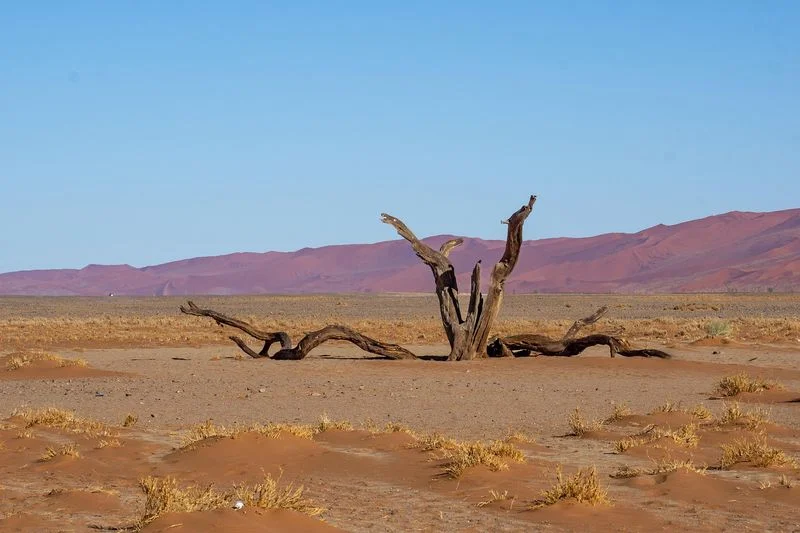
Africa is one of the oldest continents geologically and ecologically, and this is clearly reflected in the landscapes and natural processes that continue there to this day. Ongoing tectonic activity, extreme climate zones, independent ecosystems and vast areas that have remained almost free of intensive development have created a rare concentration of natural phenomena with no real equivalent anywhere else in the world. It’s not just about beauty, but about active processes that show how the Earth looks and works on a broad, uncompromising scale.
The Danakil Desert
The Danakil Desert in Ethiopia, also known as the Danakil Depression, is considered one of the most extreme places on Earth. It lies below sea level, as part of the East African Rift system, where three tectonic plates meet. This meeting point creates especially intense volcanic and geothermal activity. Here you can see natural acid pools in shades of green, yellow and orange, gas vents, vast salt flats and temperatures that regularly exceed 40°C. It’s one of the few places in the world where you can watch active geological processes right on the surface. Despite the extreme conditions, the Afar people have lived in the area for centuries, making a living mainly from salt mining, a remarkable example of human adaptation to an extreme environment.

The Great Wildebeest Migration
The Great Wildebeest Migration is the largest land animal migration in the world. Every year more than a million and a half wildebeest, along with hundreds of thousands of zebras and antelopes, move in a circular route between the Serengeti in Tanzania and the Maasai Mara reserve in Kenya. The migration is driven by seasonal changes in rainfall and the availability of grazing, and it includes dangerous river crossings, intense predation pressure and biological processes on an enormous scale, including thousands of births within a short period. No other land migration in the world today comes close to the scale, continuity and power of this phenomenon, and it survives only in East Africa thanks to the protection of huge unfenced open spaces.

The Okavango Delta
The Okavango Delta in Botswana is one of the most unusual natural phenomena in the world. The Okavango River flows from the rainy highlands of Angola into the Kalahari Desert, but unlike most rivers it never reaches the sea. Instead, the water spreads out over a vast area of swamps, lagoons and small islands, and slowly evaporates. Once a year, in the flood season, the dry desert turns into an exceptionally rich ecosystem, with high concentrations of elephants, hippos, predators and waterbirds. It’s an inland delta, a very rare geological phenomenon, and the Okavango Delta is one of the largest and most intact of its kind in the world.

Lake Natron
Lake Natron in Tanzania is an extremely alkaline lake whose pH can reach values above 10. A high concentration of salts and minerals gives the water red and orange hues, partly as a result of unique microorganisms that can survive these conditions. The lake is known for preserving animals that died near it, creating an almost sculptural look, yet at the same time it’s one of the world’s most important breeding sites for lesser flamingos. The extreme water conditions keep predators away, allowing the flamingos to raise their young in relative safety. The combination of an extreme environment and a thriving species makes Lake Natron a clear example of evolutionary adaptation.
Fairy Circles
במדבר נמיב שבנמיביה, אחד המדבריות העתיקים בעולם, פזורים אלפי מעגלים כמעט מושלמים בקרקע, אזורים נטולי צמחייה המוקפים בעשב גבוה יחסית. התופעה מכונה “מעגלי הפיות”, ועד היום אין הסכמה מדעית חד משמעית לגבי הגורם לה. ההשערות המרכזיות כוללות פעילות של טרמיטים תת קרקעיים, תחרות על מים בין צמחים, או שילוב של מנגנונים אקולוגיים מורכבים. מה שברור הוא שהתופעה כמעט ואינה קיימת מחוץ לאזור זה (ב-2016 דווח על מעגלים דומים גם במערב אוסטרליה), ובוודאי לא בקנה מידה כזה. מעגלי הפיות נחשבים לדוגמה מרתקת של דפוסים גיאומטריים טבעיים שנוצרים ללא התערבות אנושית.

Mount Kilimanjaro
Mount Kilimanjaro in Tanzania is the highest mountain in Africa and the highest free-standing mountain in the world. What makes it unique is that it rises almost 6,000 meters (5,895 m) above sea level, very close to the equator, and is still covered with glaciers and snow at its summit. The climb crosses five different climate zones, from tropical rainforest through savanna and alpine zones to freezing conditions at the summit. Kilimanjaro’s glaciers are steadily retreating and are clear evidence of the effects of climate change. It’s one of the few places in the world where you can see such a sharp transition from a tropical to a frozen climate within a single walk.

Africa isn’t just a travel destination, but a place where you can see the Earth at work in full force. These natural phenomena aren’t just impressive sights; they’re living evidence of the world’s geological, biological and climatic history, and of the ability of life, including humans, to adapt to even the most extreme conditions.


