
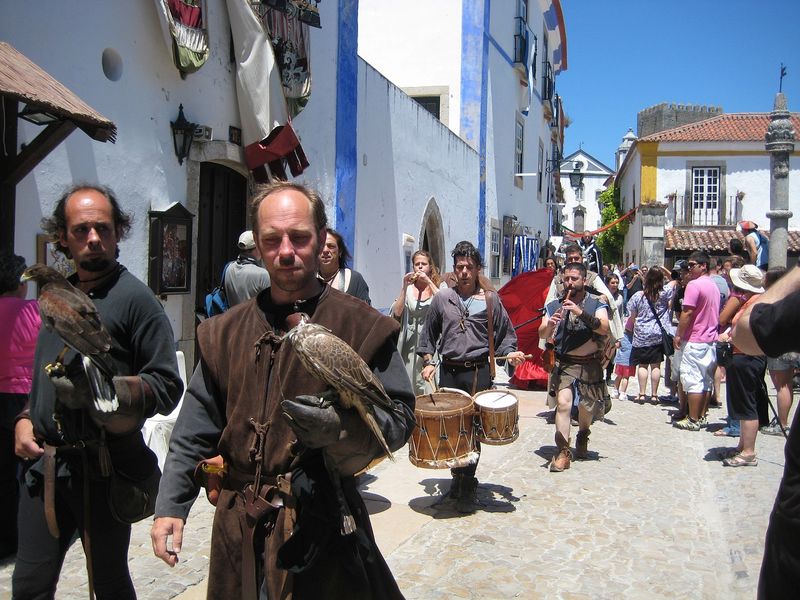
The Middle Ages were a hard and often cruel time for those who lived through them, but if you want to step into that era without the hardship and cruelty, the town of Óbidos is probably the place for you. Óbidos is a small, ancient town north of Lisbon, set on a hill and surrounded by an old wall. It’s classified as a national monument in Portugal and is part of a municipality called Óbidos, which includes several other towns and villages.

How Much Time Do You Need?
Most visitors come for a single day, on a day trip from Lisbon. But if you want to really feel and experience the history and atmosphere of the town, stay at least one night. Another option is to stay in the little town and take a few short day trips in the area.
Recommended Hotels in Óbidos
Óbidos is a small town, and you’ll find lots of great apartments to stay in, such as Entre Vinhas & Mar, Bedebike and Mood Lodging. If you’d rather stay in a hotel, here are some great options:
- Hotel Real d Obidos – a small hotel in a 14th-century house, with an outdoor pool overlooking the walls of Óbidos Castle. The air-conditioned rooms are designed around a historic concept.
- Royal Obidos Spa & Golf Resort – if you want to treat yourself, the Royal Óbidos design hotel overlooks the ocean and has an outdoor pool with sun loungers. You can also relax at the spa, which offers a range of treatments and massages.
How Do You Get to Óbidos?
Train – Portugal’s national railway reaches Óbidos too, but keep in mind that although tickets are relatively cheap (about €10), it’s a regional train that stops at many stations along the way, so the ride is fairly long (about two and a half hours on average).
Organized group tour – These tours run shuttles or minibuses (usually from Lisbon), and the ride is fairly comfortable and takes under an hour. Click here to book a place on a highly recommended tour. The tour visits Óbidos, the Catholic Sanctuary of Fátima and the Monastery of Batalha.
Public bus – The bus service from Lisbon to Óbidos is convenient and modern and even has Wi-Fi on board. The ride takes a little over an hour.
Private car – The main way visitors get there.
When to Visit
Spring (March–April) through summer and a little after is a good time to visit (the town’s festivals take place in these months). Winter is cold, but not too cold, and with warm clothes you can comfortably walk the alleys, streets and town wall.
Stepping into the Pages of History
The area was settled in ancient times, later came under Roman rule, and after that came the Muslim conquest (the Moors). In the mid-12th century, Portugal’s first king captured the town, and it has kept its Christian character ever since. The walled town became a strategic stronghold against attacks by Muslim forces.
Women in Charge
Under Portuguese rule, an interesting custom took root: the kings of Portugal “gave” towns as gifts to their queens, and the town came under the queen’s own responsibility and management. It began with King Dinis, who gave Óbidos to Queen Isabel, and it spread to other towns, creating an old tradition of towns run by women.
The Earthquake That (Almost) Destroyed It
Portugal suffered an especially severe earthquake in the 18th century (1755), and as a result large parts of Óbidos collapsed and were destroyed. Over the years, extensive and costly restoration work was carried out to bring back the look of a medieval town.
Top Attractions in Óbidos, or in Short: What Is There to See?
- Wander the alleys – The town is full of narrow alleys and streets typical of times past, with colorful houses that add to the special atmosphere as you walk. As you wander you’ll find small galleries, museums and other charming corners that are simply fun to see. The town’s main street is called Rua Direita, and it’s pedestrian-friendly.
- The town gate (Porta da Vila) – The walled town is entered through a historic gate decorated with a scene of the Passion of Christ made of azulejos, the painted ceramic tiles typical of Portugal.
- The town wall – The wall surrounds the whole town, and there’s a walking route along the top of the wall, whose height varies. The route is about a kilometer and a half long and very enjoyable.
- Church of Santa Maria – A church dating back centuries, which in its various incarnations has been both a mosque and a monastery. Among other things, it’s important because it hosted the wedding of King Afonso V and his cousin Isabel. By the way, at the time of the wedding they were 9 and 10 years old.
- Festivals – Several festivals take place in the town throughout the year, drawing a loyal crowd of regulars as well as casual visitors
| Chocolate Festival | March–April | A different theme each time, all about chocolate |
| Medieval Festival | Mid-July to mid-August | A medieval atmosphere, stalls, costumed characters, street theater and more |
| Literary Festival | September / October | Books, authors and literature |
- Óbidos Castle – The castle underwent major restoration after the earthquake. It stands high above the town and offers views over the surrounding countryside. Today part of it is a heritage hotel, but you can still go in and see the castle even if you’re not a hotel guest.
- Buddha Eden – A huge sculpture garden near the town displaying an enormous, amazing collection of Buddha statues in different colors and sizes. It also has gardens, ponds and other kinds of sculptures.
- The town pillory – In the center of town stands an impressive stone pillar. On the one hand it symbolizes the strength of a town that has survived for centuries, but on the other it was used as a whipping post and is a reminder of the hard, cruel times of the Middle Ages.
- The town museum – A museum with archaeological finds, exhibitions and displays spanning centuries that together tell the town’s fascinating story.
What to Eat in Óbidos
Luckily, the food in Óbidos isn’t medieval, and you’ll find everything in town: restaurants serving traditional Portuguese food, restaurants with international dishes, street food stalls and cafés.
What to Drink in Óbidos
Beyond the usual drinks, the town is proud of a drink with the funny name ginjinha, a sour cherry liqueur served in chocolate cups, so the drink mixes with the chocolate.

More Articles for Travelers in Portugal
Where are you heading after Óbidos? These articles will help